Browse our comprehensive range of pharmaceutical products.
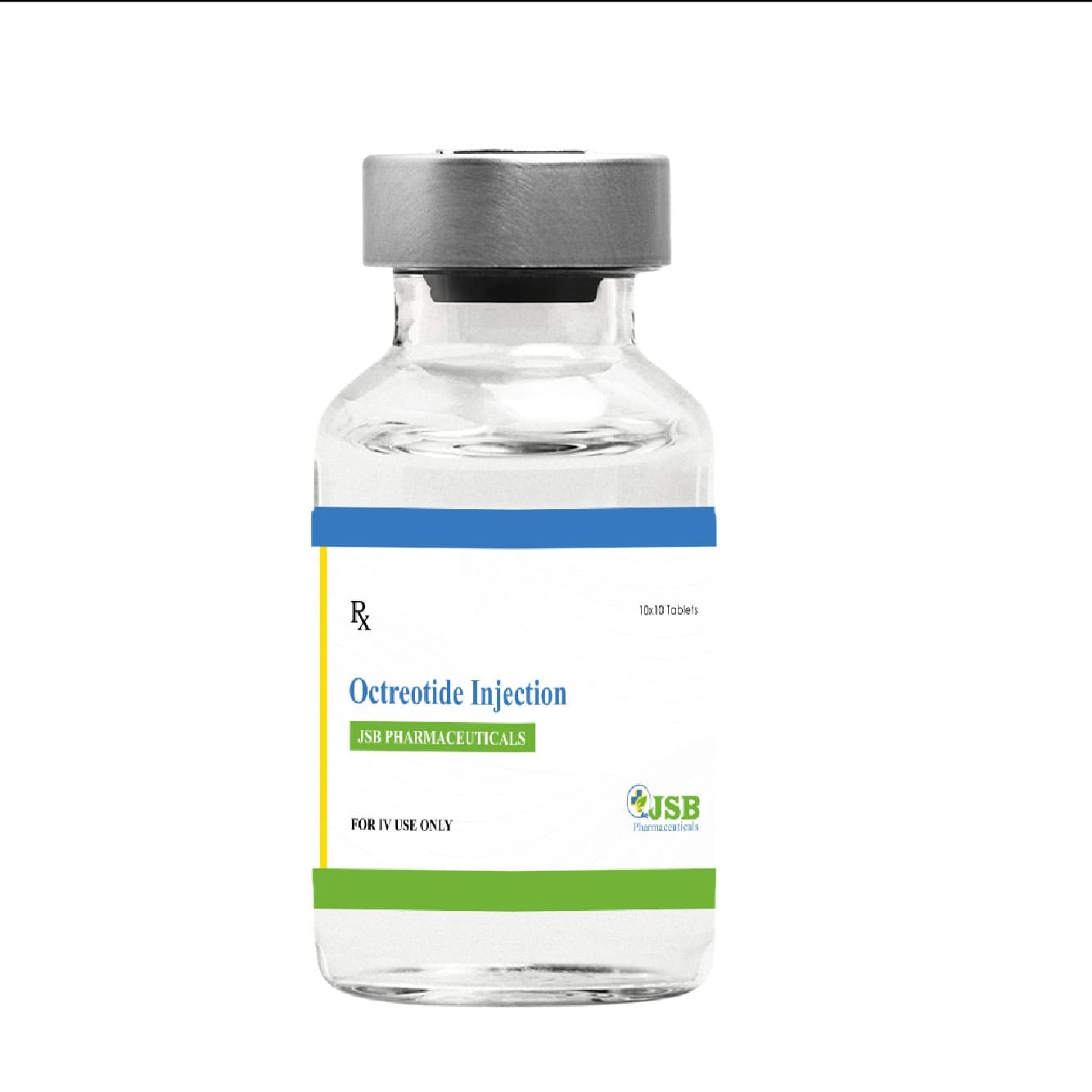
What is Octreotide used for?
This medicine reduces levels of growth hormone and brings them to normal range. It also helps to control severe flushing and diarrhea arising from VIPomas and carcinoid tumors. It is useful in managing bleeding esophageal varices. This product can also prevent complications from pancreatic surgery. For off-label use, it is taken as hyperinsulinemic hypoglycemia.
How does Octreotide work?
As a somatostatin analog, this medicine stops secretion of glucagon, gastrin, growth hormone, insulin, and other hormones. This mechanism helps reduce gastrointestinal motility and splanchnic blood flow. It also helps reduce symptoms related to tumors and stabilizes hormone levels in acromegaly.
What are the Octreotide ingredients and available forms?
The active ingredient is Octreotide acetate. The available format is immediate-release subcutaneous/intravenous injections (solution). It is also provided as a long-acting intramuscular depot (powder for suspension), and oral capsules (Mycapssa) for management of acromegaly
How long does Octreotide take to act?
Subcutaneous octreotide works quickly in 30 minutes to control carcinoid severity and variceal bleeding. It may take 2 hours for peak effects in suppressing the growth hormone. Intramuscularly administered long-acting solution has peak effects in one to three days, but the effects are steady over the next few weeks.
How long does the treatment with Octreotide last?
Effects last for 6 to 12 hours per dose for short-acting treatment. In case of long-acting intramuscular administration for maintenance of carcinoid and chronic acromegaly, the treatment is repeated every 4 weeks. Duration of treatment is lifelong for tumors or acromegaly until surgery is performed. It is advisable to keep a constant check on the treatment tolerance and response.
What are the Octreotide benefits?
Along with reducing joint main and tissue growth in acromegaly, Octreotide also combats flushing and diarrhea in VIPoma/carcinoid. It thus eases hemostasis in variceal bleeding. If you take the long-acting forms of this medicine under medical supervision, then it can give better control over acromegaly than bromocriptine.
What is the Octreotide dosage and administration?
The dose will depend on the medical condition and recommendation of a healthcare professional. The initial dose (divided over 2 to 4 doses) 200-300 mcg/day subcutaneously for acromegaly. The maximum dose in this case may go up to 450mcg.
In case of long-acting treatment, the dose is 20mg intramuscularly, repeated after every 4 weeks. For carcinoid, the dose is a subcutaneous solution, 100-600 mcg/day, while it is 25-50mcg intravenously bolus for varices and then infusion.
What are the Octreotide side effects?
Common side effects for injectable solution are injection site pain, nausea, diarrhea, abdominal cramps, flatulence, gallstones, bradycardia, hyperglycemia. The rare effects are hypothyroidism, alopecia, and vision changes. It is advisable to monitor during treatment the levels of glucose, thyroid, as well as gallbladder condition.
What are precautions and contraindications of Octreotide?
Contraindications are those allergic to the medicine and its ingredients. Maintain caution when using Octreotide in diabetes (alters glucose), category B pregnancy, cardiac disease (bradycardia), or risk of gallstones. Do not alter the treatment and stop the medicine abruptly or it may lead to rebound. As a precaution, it is essential to monitor kidney/liver function and hormone levels during the treatment.