Browse our comprehensive range of pharmaceutical products.
What is Bactrim used for?
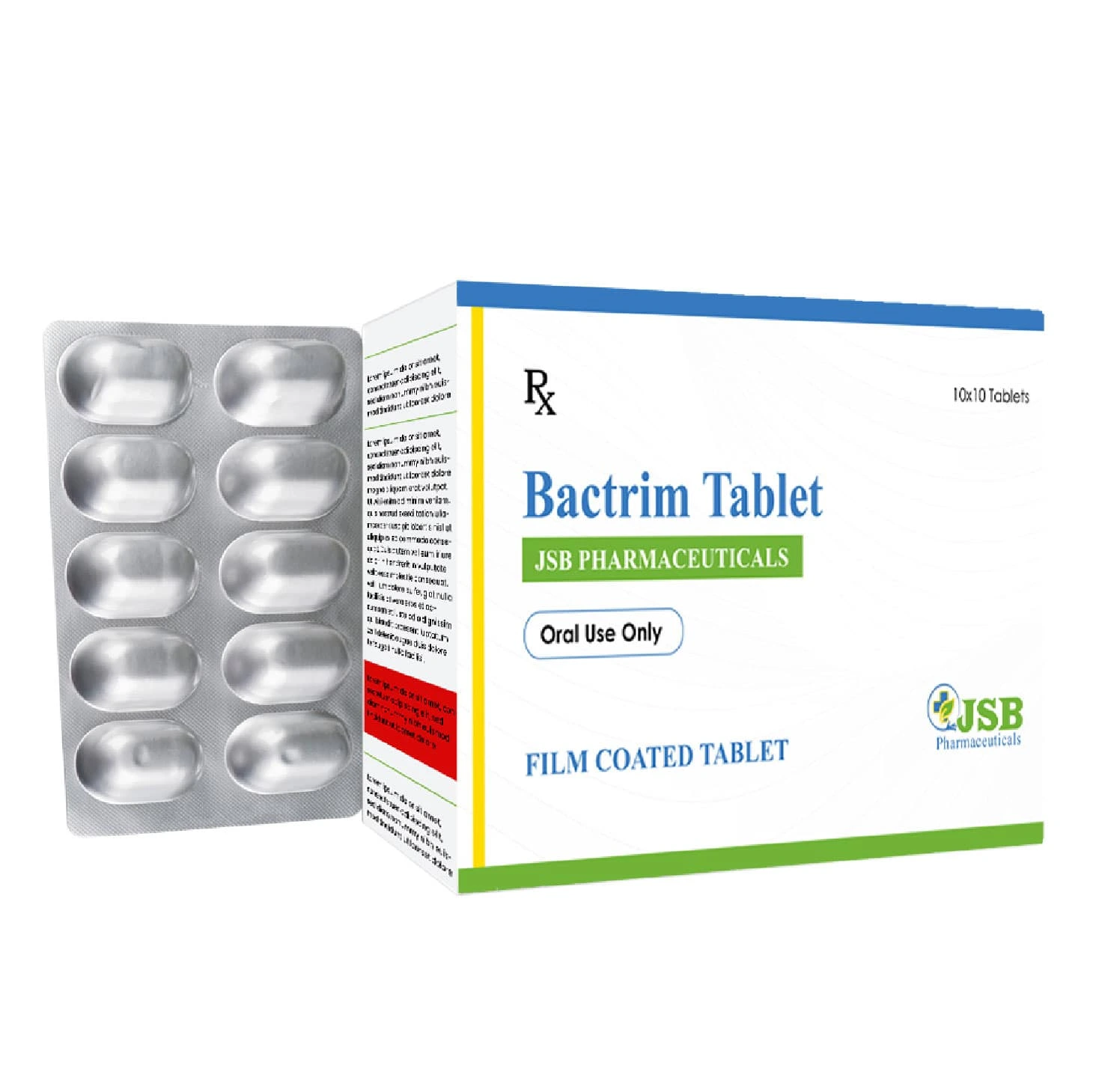
As an antibiotic, Bactrim is used to treat different types of bacterial infections. They are effective for urinary tract infections, and bacterial impact on the gastrointestinal tract and respiratory system. It also works fine against common cold or flu and other viral infections.
How does Bactrim work?
Since it is a combination of two antibiotics, Bactrim disrupts the folic acid synthesis pathway present in bacteria. By doing this, the medicine restricts the bacterial multiplication and growth. Sulfamethoxazole stops the availability of folic acid in the bacteria, while Trimethoprim blocks dihydrofolic acid transformation into tetrahydrofolic acid.
What are the Bactrim ingredients and available forms?
The active ingredients are sulfamethoxazole and trimethoprim in Bactrim. It is available as oral suspension liquid, regular or double-strength tablets, and intravenous forms of medication.
How long does the treatment with Bactrim last?
For urinary tract infections, the treatment duration is usually for 10 to 14 days, the same for ear infection, bronchitis, Pneumocystis Pneumonia, traveler’s Diarrhea, and Shigellosis, are for 10 days, up to 14 days, 14 to 21 days, and 5 days, respectively. Thus, duration will differ depending on the medical condition and its seriousness.
What are the Bactrim benefits?
This medicine is effective against bacterial infections in the respiratory/urinary/gastrointestinal tract, skin and soft tissues, a serious lung infection (Pneumocystis pneumonia (PCP)), and infection from the parasite Toxoplasma gondii. The rapid onset action and availability in different forms add to convenience.
What is the Bactrim dosage and administration?
The Bactrim tablet is available as a 400mg sulfamethoxazole and 80mg trimethoprim composition. Then there are 800mg and 160mg of the discussed ingredients in double-strength tablets. Take the medicine once a day or two tablets at an interval of 12 hours after food, or as directed by the physician. For oral suspension, injections, and other forms, it is best to follow treatment as per prescription.
What are the Bactrim side effects?
The common side effects are nausea, rashes, diarrhea, vomiting, hives, loss of appetite, fatigue, headache, dizziness, increased sensitivity to sunlight, muscle or joint pain, etc.
What are Bactrim precautions and contraindications?
Do not take Bactrim if you have an allergy to its contents and sulfa substances, Megaloblastic anemia, Severe blood dyscrasias, low platelet count (thrombocytopenia), taking dofetilide (heart medicine), use in infants below 2 months old, etc. Caution and medical supervision are advised in people who are pregnant and breastfeeding, with folate or G6PD deficiency, HIV/AIDS, kidney/liver disease, thyroid dysfunction, porphyria, severe asthma, etc.
Answer the following questions to determine if you may have a UTI or STD/STI