Browse our comprehensive range of pharmaceutical products.
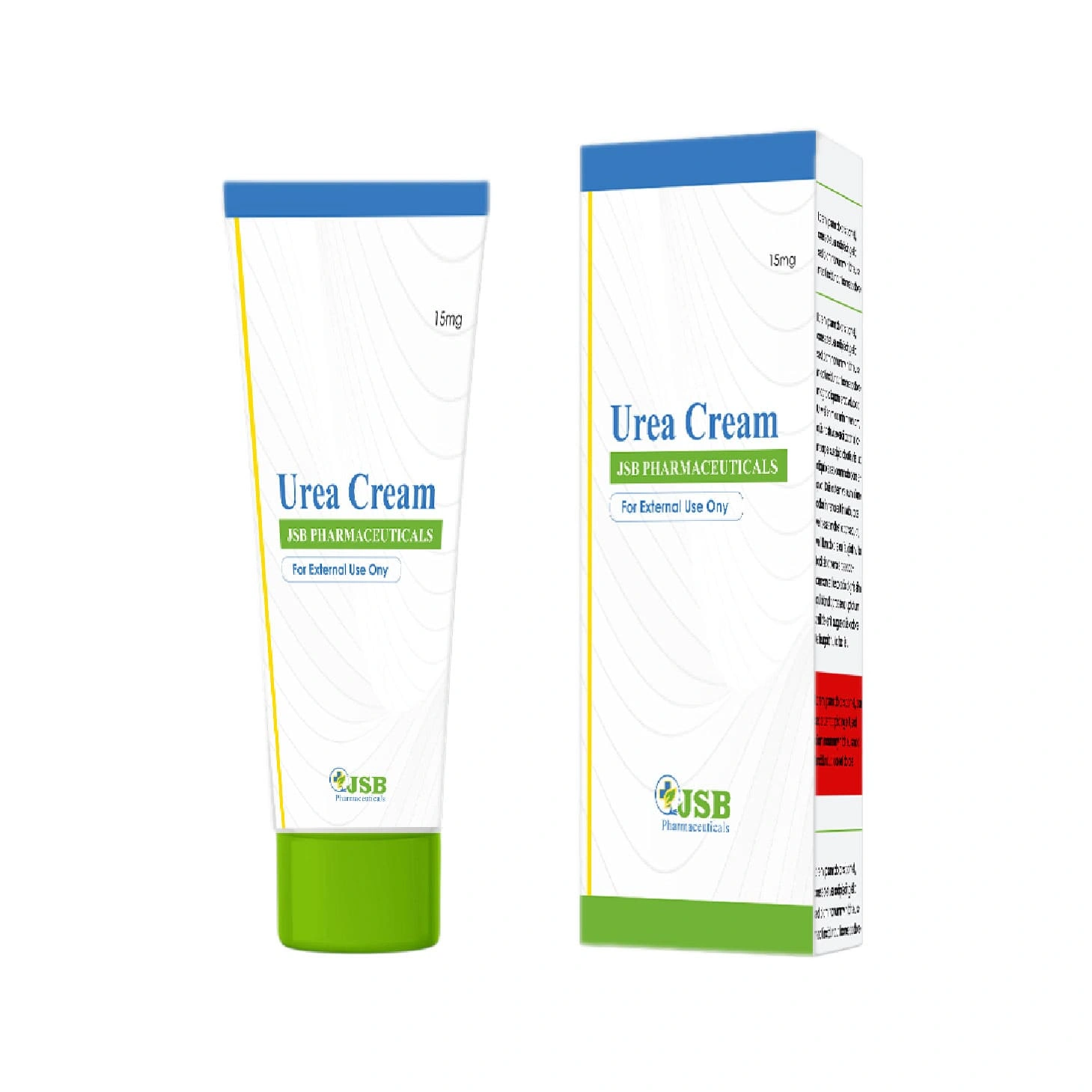
What is Urea used for?
This medicine treats hyperkeratotic skin conditions such as ichthyosis, eczema, dry skin, psoriasis, damaged nails, calluses, and corns. It is offered as topical treatment to soften thick skin and help in their healing. When taken through IV or orally, it is used to manage brain edema, hyponatremia (SIADH), and glaucoma via osmotic diuresis.
How does Urea work?
Used as a keratolytic, Urea breaks down keratin in the stratum corneum. The process is helpful in hydrating and exfoliating skin. It moisturizes as a humectant, while increasing urine flow by working osmotically. It does not affect sodium load and yet corrects hyponatremia, while reducing intracranial pressure.
What are the Urea ingredients and available forms?
The key component is urea, available in 2-40% concentrations. The available formats for this medicine are creams, lotions, gels, ointments, and nail lacquers. It is also produced as oral powders/solutions and IV injections. Urea is often taken as a combination with steroids or antifungals to enhance the results.
How long does Urea take to act?
You may experience softening of the skin in just a few hours to a few days. However, it can take one to two weeks for complete keratolysis. If used orally or via IV, then effects on pressure or sodium happen in one to four hours, with peak effect in 24 hours. You must use this medicine regularly to get skin improvement.
How long does the treatment with Urea last?
It can take weeks to months when Urea is used topically on skin. Then it is used for maintenance of the skin condition. For hyponatremia, it can take a few days to see positive effects and continue for years if the condition is chronic. However, once the skin problem goes away, the treatment can be discontinued, only to be used if symptoms occur.
What are the Urea benefits?
The benefits of Urea include gentle effect on rough skin to make it hydrated and moisturized. It penetrates the skin topically and gives relief against xerosis/psoriasis. It non-invasively treats nails. It also normalizes sodium levels in hyponatremia. It is cost-effective compared to vaptans. Moreover, it protects against demyelination.
What is the Urea dosage and administration?
If using a topical form of urea, apply the 10-40% cream one to two times a day on the affected skin area. You can apply a thicker layer for thicker lesions. If you take oral form for hyponatremia, take medicine with water once in a day 15-60g.
When taken through IV, then the dose is 1g/kg administered over hours. It is advisable to avoid contact with the medicine with your eyes. The dose could be altered by the doctor depending on the skin condition.
What are the Urea side effects?
Topical side effects of Urea are stinging, burning, irritation (higher strengths), erythema. Systemic side effects may include nausea, vomiting, headache (oral). There could be risk of rare effects such as hyponatremia correction issues. The side effects usually are temporary and mild.
What are precautions and contraindications of Urea?
Contraindications are using the topical urea on open wounds or if you have allergy to the medicine ingredients. Do not let the medicine get into mucous membranes and eyes. If used in children or face, you may use a low % dose or as advised by a healthcare expert. Caution is advised in case of pregnancy and systemic kidney failure. It is essential to keep a check on sodium levels when taken in oral form.