Browse our comprehensive range of pharmaceutical products.
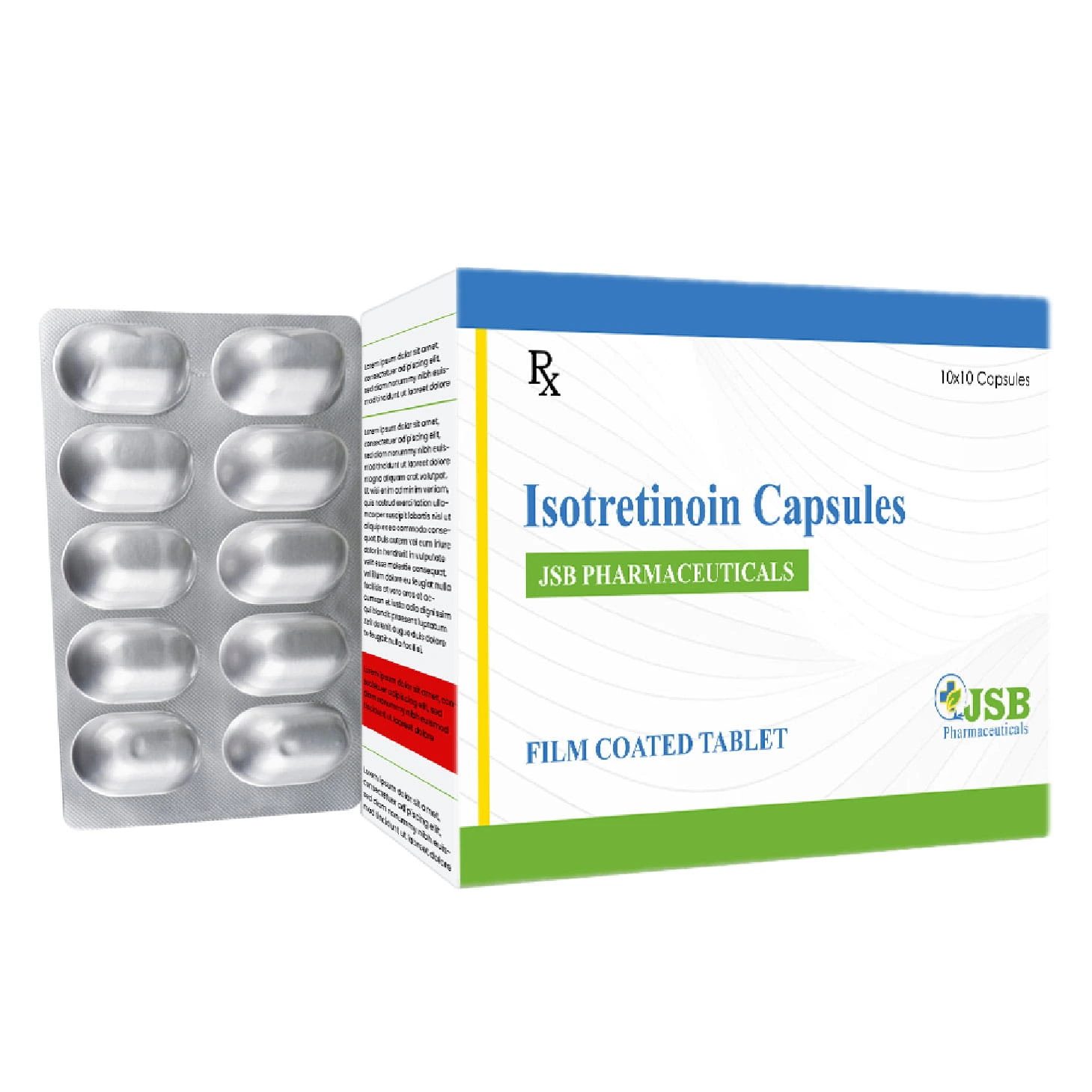
What is Isotretinoin used for?
Isotretinoin treats severe, recalcitrant nodular acne that otherwise does not respond well to other antibiotics and topical treatment. The medicine is effective when conventional therapies fail. It works by disfiguring acne with off-label uses for hidradenitis suppurativa, rosacea, and specific skin cancers such as squamous cell carcinoma in high-risk individuals.
How does Isotretinoin work?
Isotretinoin reduces sebaceous gland size. It also reduces sebum production by up to 90%. The action mechanism underlines normalizing keratinization to prevent clogged pores. It has anti-inflammatory effects. The medicine is a retinoid. It is responsible for inducing cell differentiation. By doing so, it inhibits proliferation of inflammation and infection in skin affected by acne.
What are the Isotretinoin ingredients and available forms?
The active component in this medicine is isotretinoin (13-cis-retinoic acid), a vitamin A version. It is available as soft gelatin oral capsules in dosage strengths such as 10mg, 20mg, 30mg, and 40mg. The medicine is usually taken after food.
How long does Isotretinoin take to act?
It can take one to two months with regular use to see some improvements like reduced inflammation. In 4 to 8 weeks, you can expect significant reduction in lesions. It may take 4 to 6 months for full clearance, but it may take just a few weeks for sebum suppression.
How long does the treatment with Isotretinoin last?
The usual treatment course lasts for 4 to 6 months. The cumulative dose of 120-150 mg/kg is effective for long-term remission. If taken in low dose for instance 0.25-0.5 mg/kg, the treatment can go up to 12 months, as this delivers better tolerance for some individuals.
What are the Isotretinoin benefits?
Just in one course, this medicine causes long-term acne remission in 80-90% of cases. It is effective in clearing severe nodules. It prevents skin scarring. It works for acne resistant to other treatments and antibiotics, giving lasting results.
What is the Isotretinoin dosage and administration?
The normal dose is daily intake of 0.5-1 mg/kg body weight. The dose is split in two with high-fat meals to enhance absorption. The dose can be low in the beginning per day, ranging from 10mg to 20mg. The dose is then adjusted as per individual response and tolerance.
What are the Isotretinoin side effects?
Common side effects are dry skin or lips, increase of lipids, muscle pain, and nosebleeds. Serious but rare risks are teratogenicity, depression, hepatotoxicity, and pseudotumor cerebri. It is advisable to regularly analyze the lipids and liver function when under the medicine.
What are precautions and contraindications of Isotretinoin?
Contraindications are pregnancy (teratogenic), breastfeeding, hyperlipidemia, and liver disease. Avoid vitamin A supplements. After treatment, avoid donating blood for at least a month. Use two contraception forms when taking this medicine. You may want to keep an eye for mental well-being as well.