Browse our comprehensive range of pharmaceutical products.
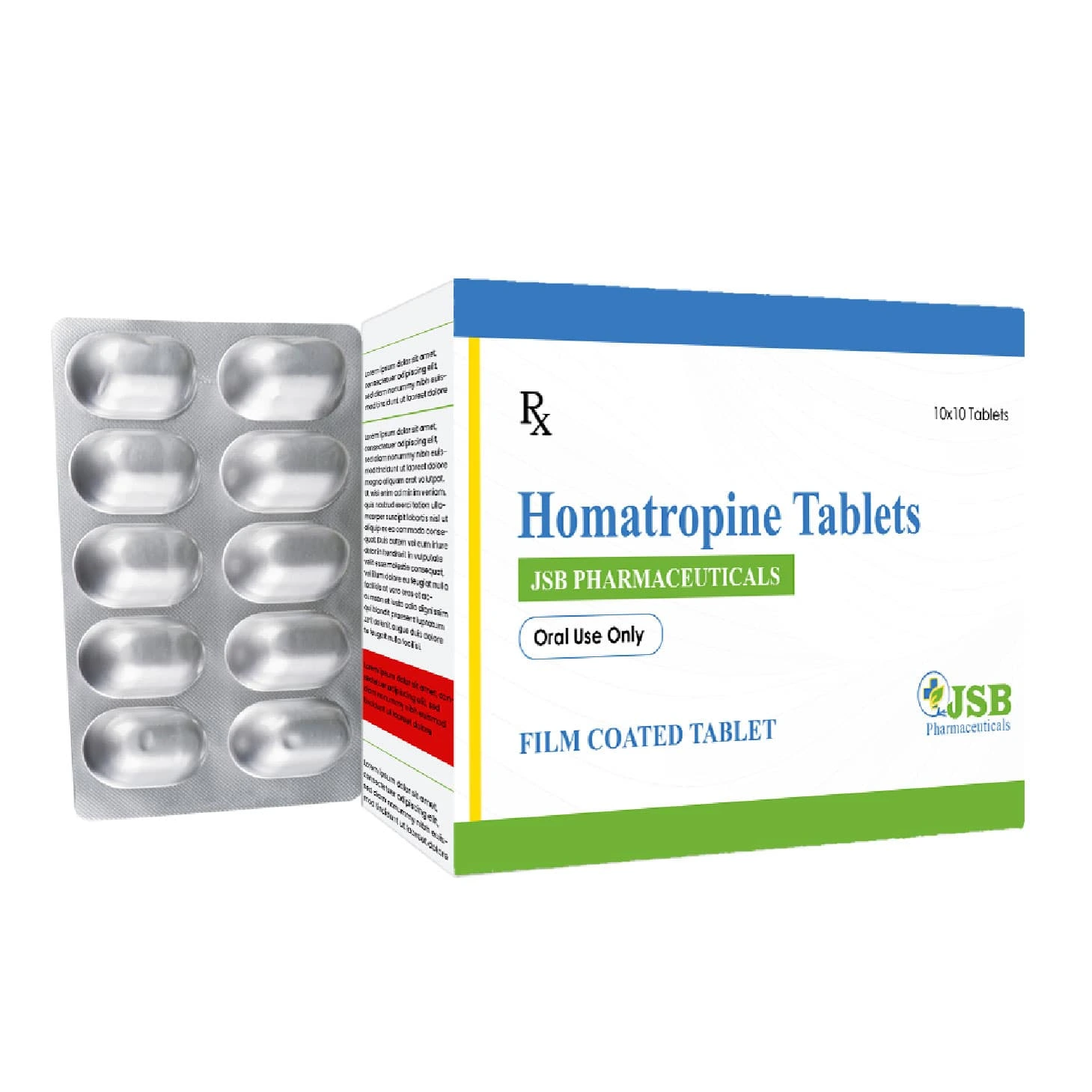
What is Homatropine used for?
This medicine is used in eye examinations during the ophthalmology process for children. It helps to dilate the pupils (mydriasis) to numb the ciliary muscle (cycloplegia). It also treats uveitis (inflammation of the uvea). Sometimes it is also used before or post eye surgery to reduce intraocular pressure. It gives relief against eye conditions related to inflammation and pain.
How does Homatropine work?
Homatropine blocks muscarinic acetylcholine receptors in the eye. It is an anticholinergic agent. The mechanism dilates the pupils and paralyzes the iris sphincter and ciliary muscles. It also restricts parasympathetic nerve stimulation. During the medical process it helps examine the internal structures of eyes properly. It reduces inflammation and pain in uveitis.
What are the Homatropine ingredients and available forms?
This medication is available in the form of eye drops (ophthalmic solution). The active ingredient in the substance is homatropine hydrobromide. The dose is available as 1% and 2% solutions. It is meant for topical ocular use. Do not administer it orally or in any other way. There are inactive ingredients such as buffers, preservatives, and stabilizers.
How long does Homatropine take to act?
Homatropine causes peak effect within 20 to 30 minutes after administration. Paralysis of accommodation is visible in 30 to 90 minutes. However, those with darkly pigmented irises may experience the effect with some delay. This may also happen with higher doses as well.
How long does the treatment with Homatropine last?
The effect of this eye solution for 6 hours to 4 days of pupil dilation. In the case of cycloplegia, the effect is for 10 hours to 2 days. The period can differ from a person to another depending on the concentration used and iris pigmentation. However, the duration of treatment is short, depending on the need for acute uveitis management and eye examination.
What are the Homatropine benefits?
The benefits of this medicine go beyond helping with eye examinations. It dilates the pupils and is useful for refractive assessments for children mostly. It gets rids of uveitis inflammation and pain. Thus, it is an important agent for diagnostic purposes. Because of the short-time effect compared to atropine, it does not have lingering side effects.
What is the Homatropine dosage and administration?
During eye examinations, this solution is used as a 2% solution, one to two drops on the affected eye. If necessary, the dosage is repeated after 5 to 10 minutes. One to drops is added to the affected eye for uveitis after every 3 to 4 hours. For children, one drop is given in the eyes and the dose is repeated (if required) after 10 minutes.
What are the Homatropine side effects?
Common side effects are blurred vision, burning or stinging sensation in the eye, dry mouth, increased sensitivity to light, and a bitter taste. Less common effects are headache, photophobia, and rise in intraocular pressure. Tachycardia and dry mouth may occur in rare cases when the solution is excessively absorbed or used.
What are Homatropine's precautions and contraindications?
Avoid using this eye drop in people with corneal disorders, unknown intraocular pressure, or liver disease. Use caution when administering this solution to elderly individuals, children, and people with Down’s syndrome. Contraindications are narrow-angle glaucoma, primary glaucoma, and hypersensitivity to belladonna alkaloids.
Do not drive or operate machinery when under the effect of this eye drop because it may lead to increased sensitivity to light and blurry vision. Similarly, use with caution in women who are pregnant or breastfeeding.
.webp)